

The Schwa Vowel Sound

Written by: Brianna Guild, MHSc SLP(C)
Date: February 19, 2024
Updated: April 1, 2026
Do you know about the schwa vowel sound? And are you explicitly teaching this vowel sound to your students?
The schwa sound is important to learn because it is the most common vowel sound in the English language!
The Schwa Vowel Sound
A schwa is a vowel sound in an unstressed syllable where the vowel does not make its “short” or “long” vowel sound. It sounds similar to the short u sound “uh” (/ʌ/) or short i sound “ih” (/ɪ/), but softer and weaker. It is often referred to as a “lazy vowel sound” because of its soft, weak sound.
It is represented by the symbol ə in the International Phonetic Alphabet (IPA).
The schwa sound is related to the “short” vowel sounds because it can be represented in spelling by any single vowel letter (a, e, i, o, u, y), although it is most commonly spelled with a, e, i, o. It is often the cause of spelling errors in multisyllable words because it can be represented by any vowel letter.
Here is a chart of example words with a schwa:

Some patterns for the schwa vowel sound in English
1. The letter a at the beginning or end of a word is usually a schwa:
above, amount, apart, asleep, pasta, sofa, umbrella, zebra
2. A single vowel before the letter l in a multisyllabic word is usually a schwa:
final, sandal, camel, level, pencil, nostril
3. Other spelling patterns that will often be a schwa:
-et as in helmet, -en as in kitten, -om as in bottom, -on as in button, and -op as in gallop
Note: schwa vowel sound pronunciation varies based on a speaker's accent and stress.
How do we teach the schwa vowel sound?
1. Teach the concept of “stressed” versus “unstressed” at the sentence level.
2. Make the link between the schwa vowel sound and unstressed vowels at the word level.
3. Teach the schwa vowel sound - short u sound “uh” (/ʌ/) or short i sound “ih” (/ɪ/), but softer and weaker.
4. Teach the concept of schwa at the syllable level, and how stress can change word meaning.
5. Teach students to try the schwa vowel sound when reading if a “short” or “long” vowel doesn’t sound right.
6. Teach students that the schwa vowel sound can be represented in spelling by any vowel letter (a, e, i, o, u, y), and work on spelling groups of words with a common schwa representation (e.g., patterns listed above).
7. Provide students with plenty of opportunities to practice identifying, reading, and spelling the schwa vowel sound. Activities may include: word sorts, word completion, and finding the schwa in words and sentences.
Join the SLP Literacy Corner email newsletter to get access to exclusive free resources, including a free sample of schwa vowel sound worksheets to help you teach students about this important vowel sound. Sign up here!
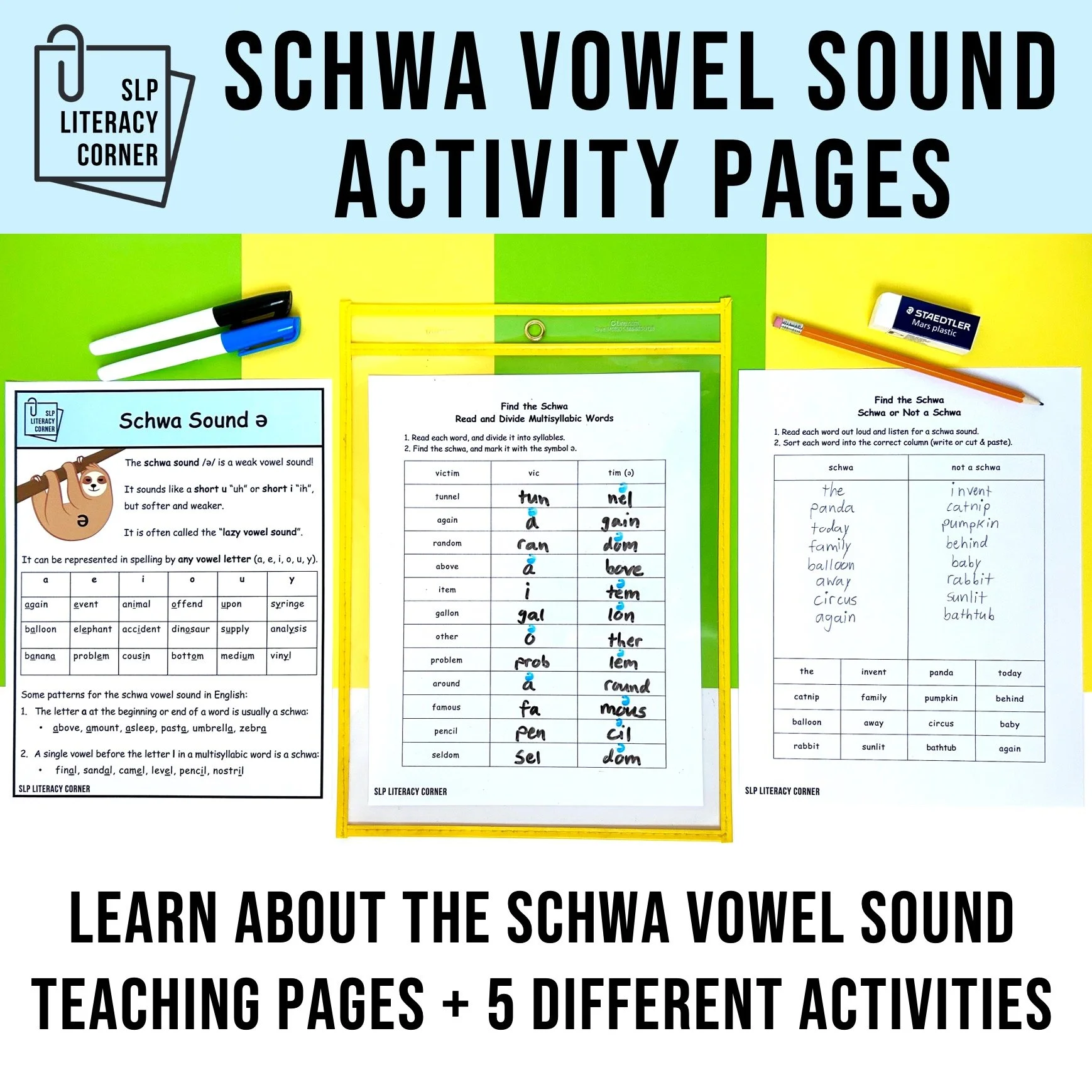
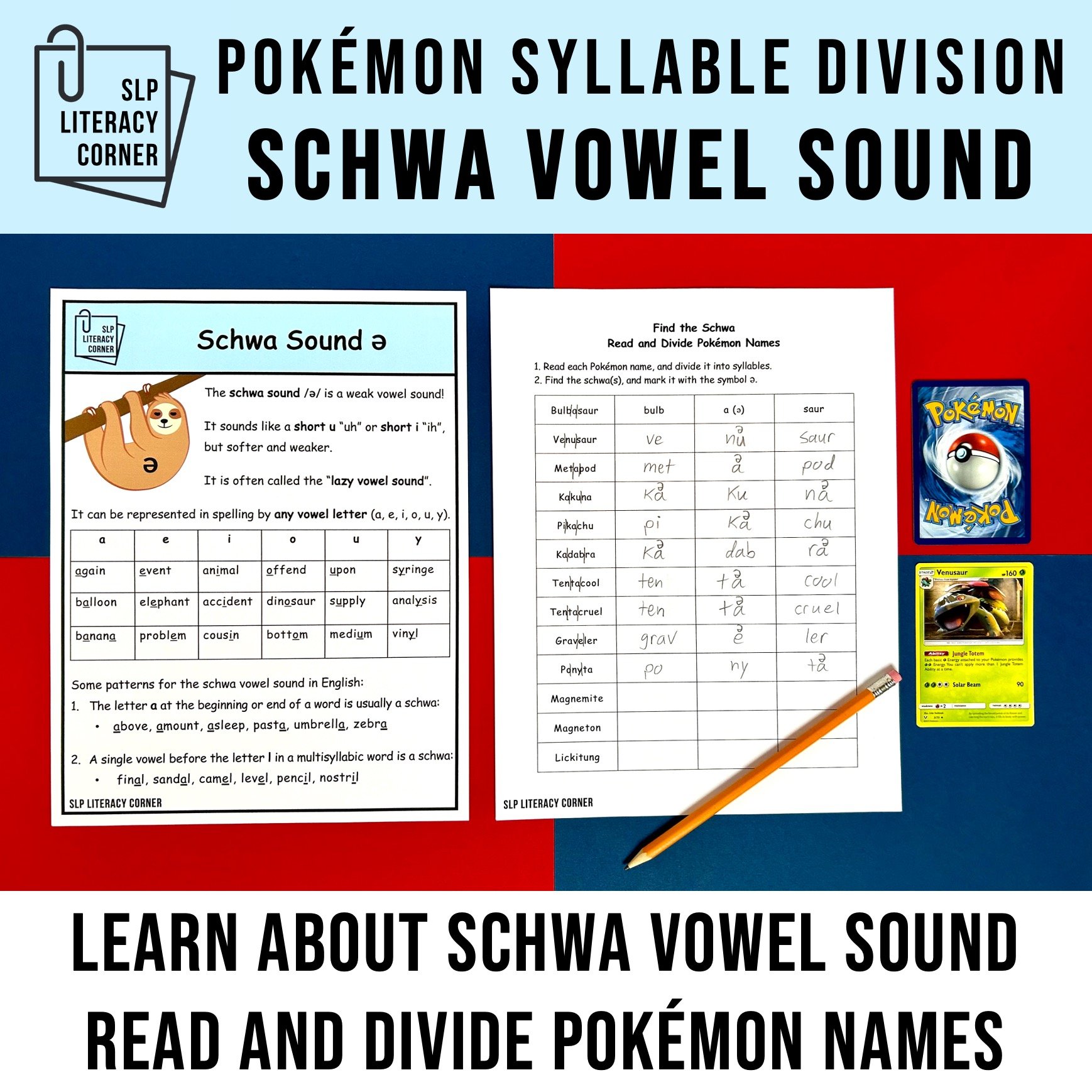
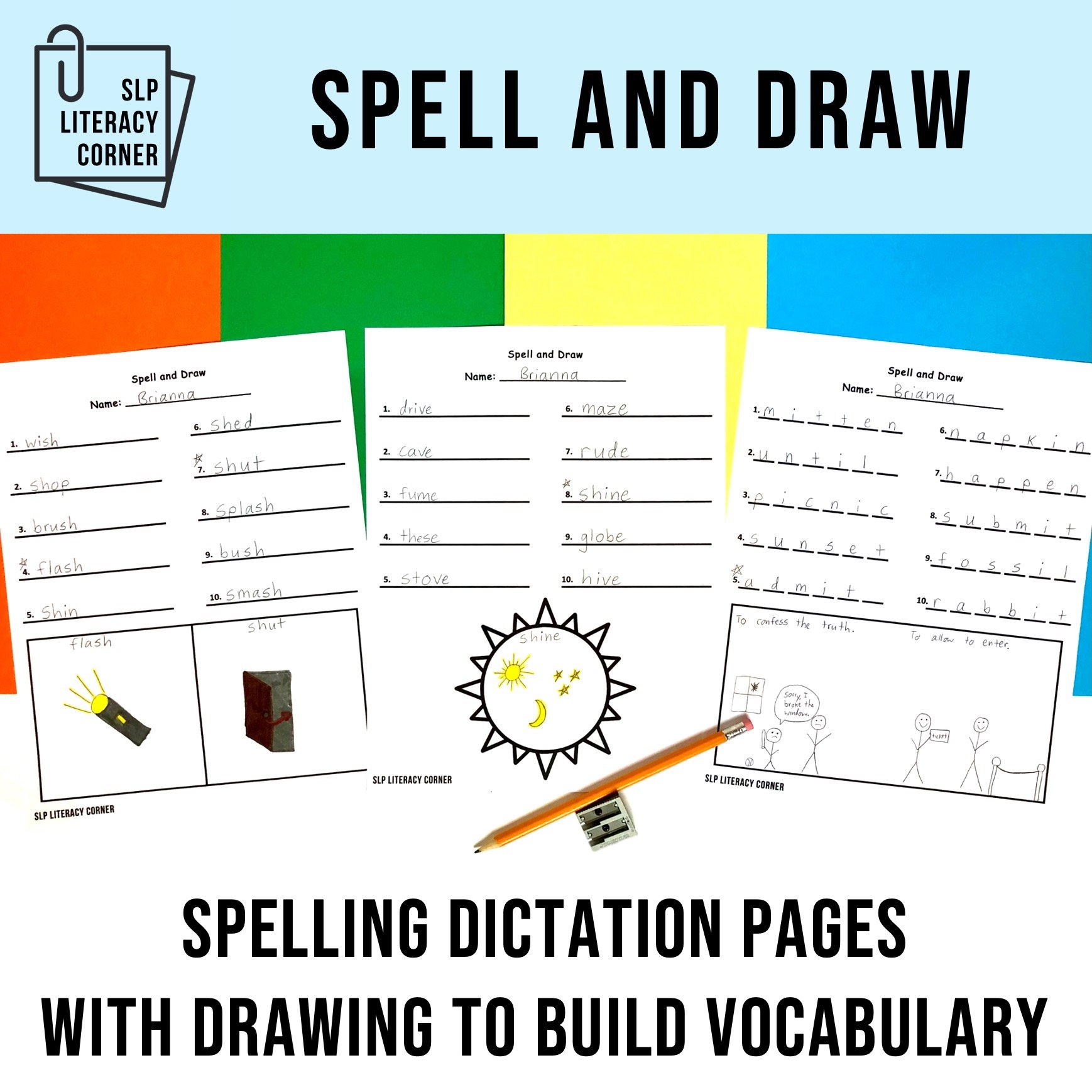
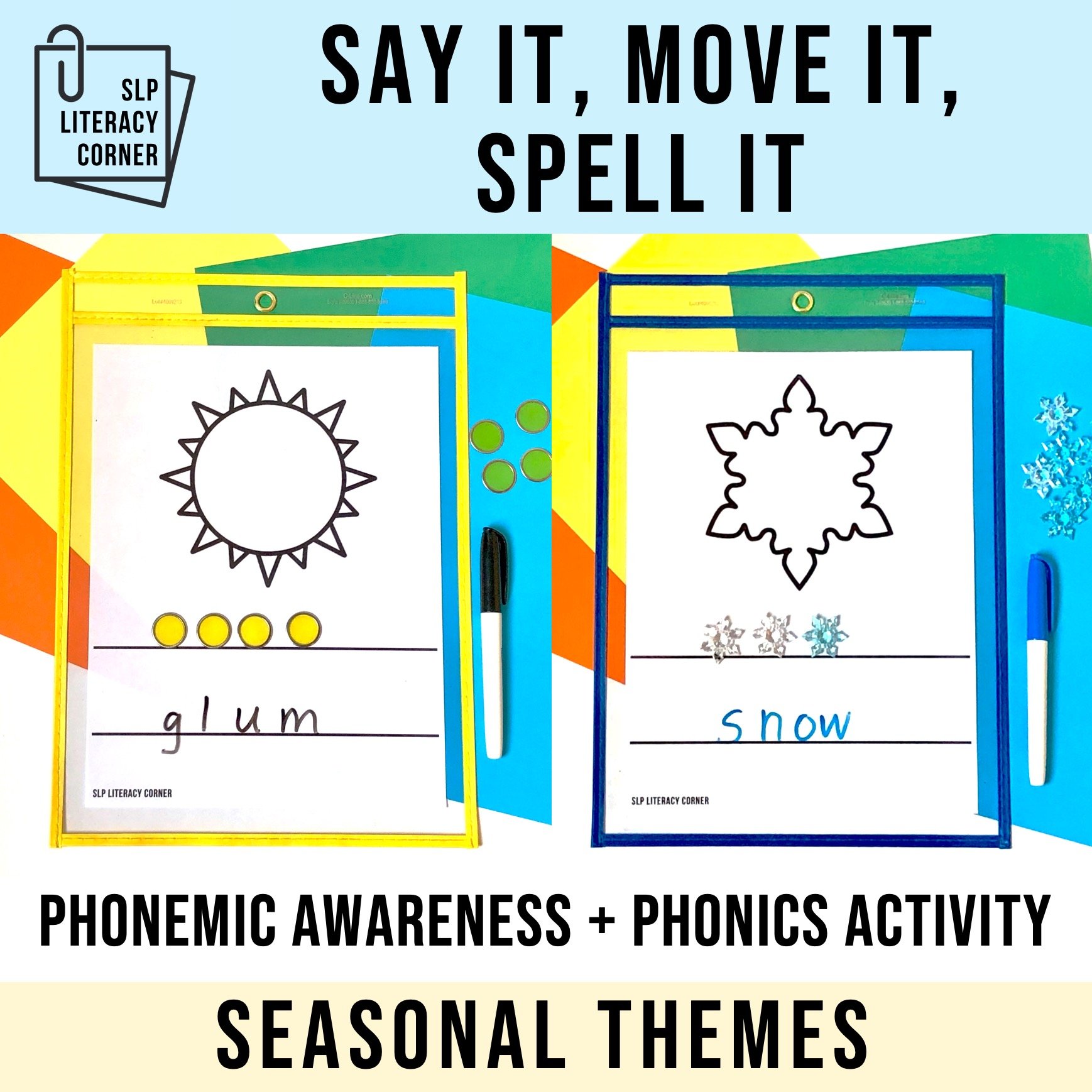
If you're looking for schwa vowel sound activities, check these out:
References:
Linda Farrell (n.d.). Two-to-Four-Syllable Words with Short Vowels and Schwa. Reading Rockets. https://www.readingrockets.org/topics/phonics-and-decoding/articles/two-four-syllable-words-short-vowels-and-schwa
Sedita, J. (2026). The Essentials of Adolescent Literacy: Integrating Evidence-Based Reading and Writing Instruction in Grades 5–12. Brookes Publishing.
Shirley Houston (n.d.). What is a Schwa and How to Teach It. Phonics Hero. https://phonicshero.com/schwa/