SLP Literacy Corner Blog
Welcome to the blog! Read more about literacy instruction and activities.

Websites for Literacy - Funny Fill-In
Check out the Funny Fill-In activities on the National Geographic Kids website! These “Mad Libs” like word games are an engaging activity for students of all ages, and you can target a wide variety of literacy goals within a single activity.

Medium Lady Talks - Podcast Guest
I had the pleasure of being a guest on the Medium Lady Talks podcast, and both episodes are out now. I talked about my personal journey learning to read, building the SLP Literacy Corner community, and all about learning how to read.

SLP Corner - Podcast Guest Ep. 119
I had the pleasure of being a guest on the SLP Corner podcast, and the episode is out now! I’ve linked all the resources we mentioned in the podcast here in this blog.

The Fluent Reader - Book Summary
This post summarizes what I learned while reading The Fluent Reader: Oral Reading Strategies for Building Word Recognition, Fluency, and Comprehension by Dr. Timothy V. Rasinski.

What is Reading Fluency?
There are 3 key characteristics of fluent oral reading: accuracy, rate, and expression. Hasbrouck and Glaser (2019) define fluency as “reasonably accurate reading, at an appropriate rate, with suitable expression, that leads to accurate and deep comprehension and motivation to read.”

A Fresh Look at Phonics - Book Summary
This post summarizes what I learned while reading A Fresh Look at Phonics: Common Causes of Failure and 7 Ingredients for Success by Wiley Blevins.
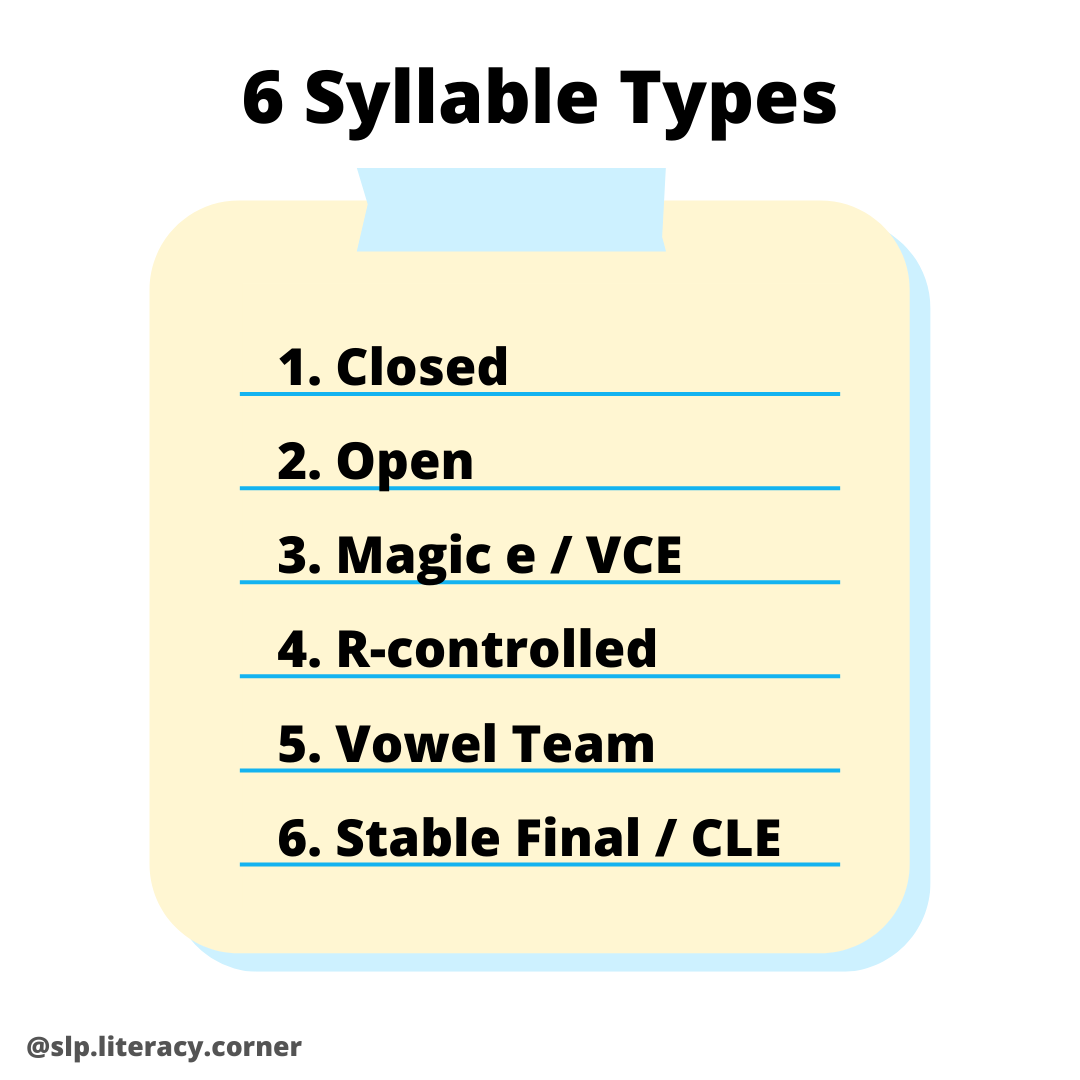
Syllable Types: To Teach or Not to Teach?
Learn all about syllable types, the arguments for and against teaching them, and three more flexible syllable division strategies to try instead.

What is Phonological Awareness?
Phonological awareness is the ability to recognize and manipulate the parts of spoken words and sentences. It is a foundational skill for both reading and writing, and is a predictor of early reading success.

Effective Literacy Instruction
When working on literacy skills, we need to look to the Science of Reading (SOR). This is the collection of research from multiple disciplines (e.g., psychology, neuroscience, education) that provides scientific evidence for how children learn to read and write, and how to best support literacy development for all readers.