

Speech Sound Disorders and Literacy
Written by: Brianna Guild, MHSc SLP(C)
Date: January 22, 2026
Research has established that children with speech sound disorders (SSDs) are more likely to have difficulties with literacy. This blog aims to provide information about the connection between SSDs and literacy, links to recent research on SSDs, and ideas for incorporating literacy into speech therapy to better support this population.
For more background information, read the blog outlining the key components of speech, language, and literacy.
The Connection Between SSDs and Literacy
“Children with speech sound disorders (SSDs) demonstrate delayed acquisition of developmentally appropriate speech sounds, resulting in reduced intelligibility of their speech... Children with SSDs are at increased risk of having difficulties learning to read. In fact, between 30% and 77% of children with SSDs struggle with reading... The risk of children with SSDs having literacy problems increases with comorbid language disorders” (Anthony et al., 2011).
Weaknesses in quality and accessibility of phonological representations may explain phonological awareness and reading difficulties in children with SSDs (Anthony et al., 2011).
Phonological and sequencing errors, but not articulation errors, are predictive of phonological awareness, letter knowledge, and literacy outcomes, even while accounting for language skills (Boada et al., 2022).
Childhood apraxia of speech (CAS) is a rare motor speech disorder where the child knows what they want to say, but the brain has difficulty planning movements required for speech, resulting in highly unintelligible speech.
“Children with CAS are particularly susceptible to phonological awareness and reading delay. Intervention for children with CAS must facilitate skills underlying reading development in addition to resolving speech deficits in order to improve the spoken and written language outcomes of this population” (McNeill et al., 2009).
Recent Research on SSDs
If you are interested in learning more about SSDs, here are 3 free (open access) research articles to read:
Speech Sound Disorders in Children: An Articulatory Phonology Perspective (Namasivayam et al., 2020)
The Articulatory Basis of Phonological Error Patterns in Childhood Speech Sound Disorders (Namasivayam et al., 2025)
Reevaluating the Classification of Pediatric Speech Sound Disorders: A Ground Truthing Perspective (Namasivayam et al., 2025)
Incorporating Literacy into Speech Therapy
Here are 4 practical ways you can incorporate literacy into speech therapy sessions:
Incorporate print through activities such as shared book reading and pairing images of target words with the printed word.
Work on strengthening phonemic awareness skills by having students orally blend, segment, and manipulate sounds in their target words.
Use activities that integrate print and phonemic awareness, such as word building and word chaining.
Include decodable texts that focus on the student’s target speech sounds. You can explore my list of free decodable texts (my favourites are the ones from Reach All Readers, formerly The Measured Mom).
Incorporating print and literacy tasks into speech therapy sessions will allow you to address speech sound errors while also supporting literacy development. Keep in mind that if the student’s goals focus on speech (e.g., reducing fronting of /k/ and /g/), you would be collecting data on the student’s speech sound production during these activities, not their reading ability.
For more information on incorporating literacy into speech therapy sessions:
Read this tutorial article Print-Rich Speech Sound Therapy Sessions: The Theory Behind It and Plans for Implementation (Moody et al., 2024).
Watch the replay of my webinar “Literacy Essentials for SLPs: Teaching Beginning Readers” through ableU where I discussed all of this and more.
Final Thought
One of my favourite parts about being a Speech-Language Pathologist is supporting clients with their speech, language AND literacy development. These areas are highly interconnected, and SLPs are uniquely positioned to assess and treat all three areas holistically. This blog highlighted the connection between speech sound disorders and literacy, and I hope it inspired you to deepen your understanding of both areas and their interconnectedness to better support students.
Join the SLP Literacy Corner email newsletter to get access to exclusive free resources, including handouts with activity ideas for different components of literacy. Sign up here!
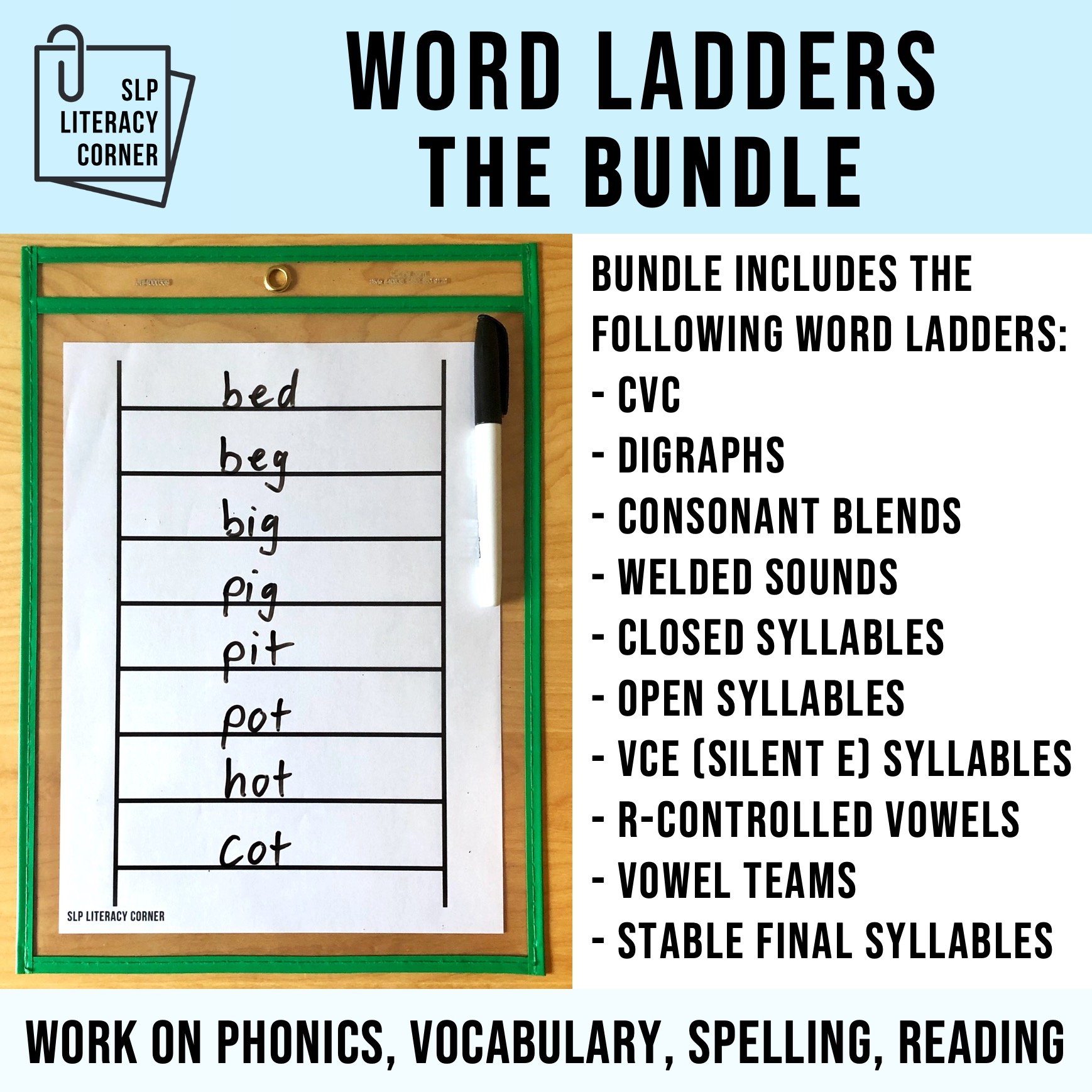
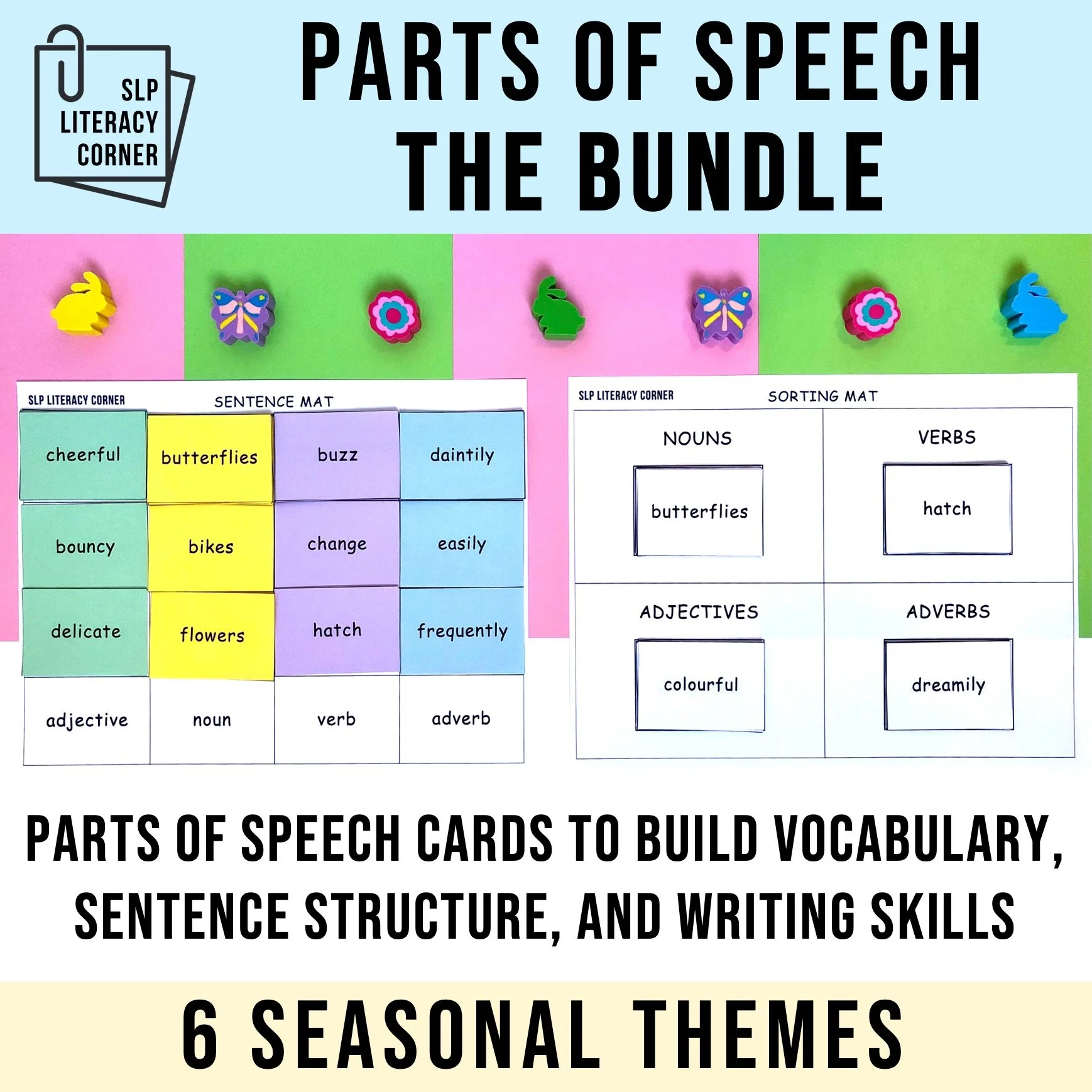
Here are some actvities that incorporate speech, language, and literacy:


References:
Anthony, J. L., Aghara, R. G., Dunkelberger, M. J., Anthony, T. I., Williams, J. M., & Zhang, Z. (2011). What factors place children with speech sound disorders at risk for reading problems? American Journal of Speech-Language Pathology, 20(2), 146–160. https://doi.org/10.1044/1058-0360(2011/10-0053)
Boada, K. L., Boada, R., Pennington, B. F., & Peterson, R. L. (2022). Sequencing deficits and phonological speech errors, but not articulation errors, predict later literacy skills. Journal of Speech, Language, and Hearing Research, 65(6), 2081–2097. https://doi.org/10.1044/2022_JSLHR-21-00241
Graham, A. (n.d.). Speech sound disorders. Graham Speech Therapy. https://www.grahamspeechtherapy.com/speech-sound-disorders.html
McNeill, B. C., Gillon, G. T., & Dodd, B. (2009). Phonological awareness and early reading development in childhood apraxia of speech (CAS). International Journal of Language & Communication Disorders, 44(2), 175–192. https://doi.org/10.1080/13682820801997353
Moody, M. A., Timm-Fulkerson, C. C., Westmoreland, J., Dennis, L. R., & Farquharson, K. (2024). Print-rich speech sound therapy sessions: The theory behind it and plans for implementation. Perspectives of the ASHA Special Interest Groups, 9(4), 949–959. https://doi.org/10.1044/2024_PERSP-23-00288
Namasivayam, A. K., Coleman, D., O’Dwyer, A., & van Lieshout, P. (2020). Speech sound disorders in children: An articulatory phonology perspective. Frontiers in Psychology, 10, Article 2998. https://doi.org/10.3389/fpsyg.2019.02998
Namasivayam, A. K., Li-Han, L. Y., Golabek Moore, J., Wong, W., & Van Lieshout, P. (2025). The articulatory basis of phonological error patterns in childhood speech sound disorders. Frontiers in Human Neuroscience, 19, Article 1635096. https://doi.org/10.3389/fnhum.2025.1635096
Namasivayam, A. K., Kent, R., Preston, J. L., Maassen, B. A. M., Hagedorn, C., Nip, I. S. B., McAllister, A., Wang, J., Hustad, K., Ménard, L., Bahar, N., Golabek Moore, J., Petrosov, J., & van Lieshout, P. (2025). Reevaluating the classification of pediatric speech sound disorders: A ground truthing perspective. Frontiers in Human Neuroscience, 19, Article 1700505. https://doi.org/10.3389/fnhum.2025.1700505