Spelling Test Practice That Actually Works: A Better Way to Study Spelling Words
Written by: Brianna Guild, MHSc SLP(C)
Date: March 9, 2026
Updated: July 16, 2026
This blog and the accompanying FREE Spelling Practice Templates are designed to help you support students with spelling practice in a way that promotes orthographic mapping, the mental process that stores words in long-term memory by connecting sounds (phonemes) to letters (graphemes), rather than rote memorization.
I created these templates to support students who are required to study for school spelling tests, especially when those tests include seemingly random words that students are expected to “memorize.” Instead of memorizing whole words, this approach encourages students to focus on the sound-to-spelling connections within each word, which is what actually supports lasting reading and spelling skills!
The Problems With Traditional Spelling Tests
The problem with many traditional spelling test routines is that they encourage students to rely on short-term memorization, often to learn lists of unrelated words. Students may be given a list of words and asked to practice by copying each word several times. They might remember the words long enough for the Friday test, but then quickly forget them. This happens because the focus is often placed on remembering the sequence of letters, rather than understanding the sound-to-spelling connections within each word.
Strong spellers don’t rely on memorization. They use their knowledge of how phonemes map to graphemes. Through a process called orthographic mapping, successful readers (and spellers) store words in long-term memory by connecting the sounds they hear in a word to the spellings that represent those sounds, as well as the meaning of the word. When spelling practice focuses on these connections, students are much more likely to retain the word and apply this knowledge to new words. It is also significantly more beneficial if assigned spelling words align with structured phonics instruction, focusing on the sound(s), spelling pattern(s) or morphemes (meaningful word parts including affixes and roots) students are currently learning, rather than a list of unrelated words.
A Better Approach to Spelling Test Practice
As a private practice Speech-Language Pathologist, I don’t have control over my students’ school spelling tests, but I do have control over how I teach them to practice for these tests. The templates included in this free resource are designed to guide students through a structured read, copy, spell routine that emphasizes sound-by-sound spelling. Each step encourages students to actively think about the phonemes in the word and the graphemes that represent them. Over time, this type of practice helps build stronger spelling skills while reinforcing the same sound-to-spelling knowledge that supports reading.
The following spelling practice instructions and free resource can be used to:
Practice weekly spelling test words
Reinforce phonics instruction-aligned word lists
Provide structured, sound-based spelling practice
Spelling Practice Activity Instructions
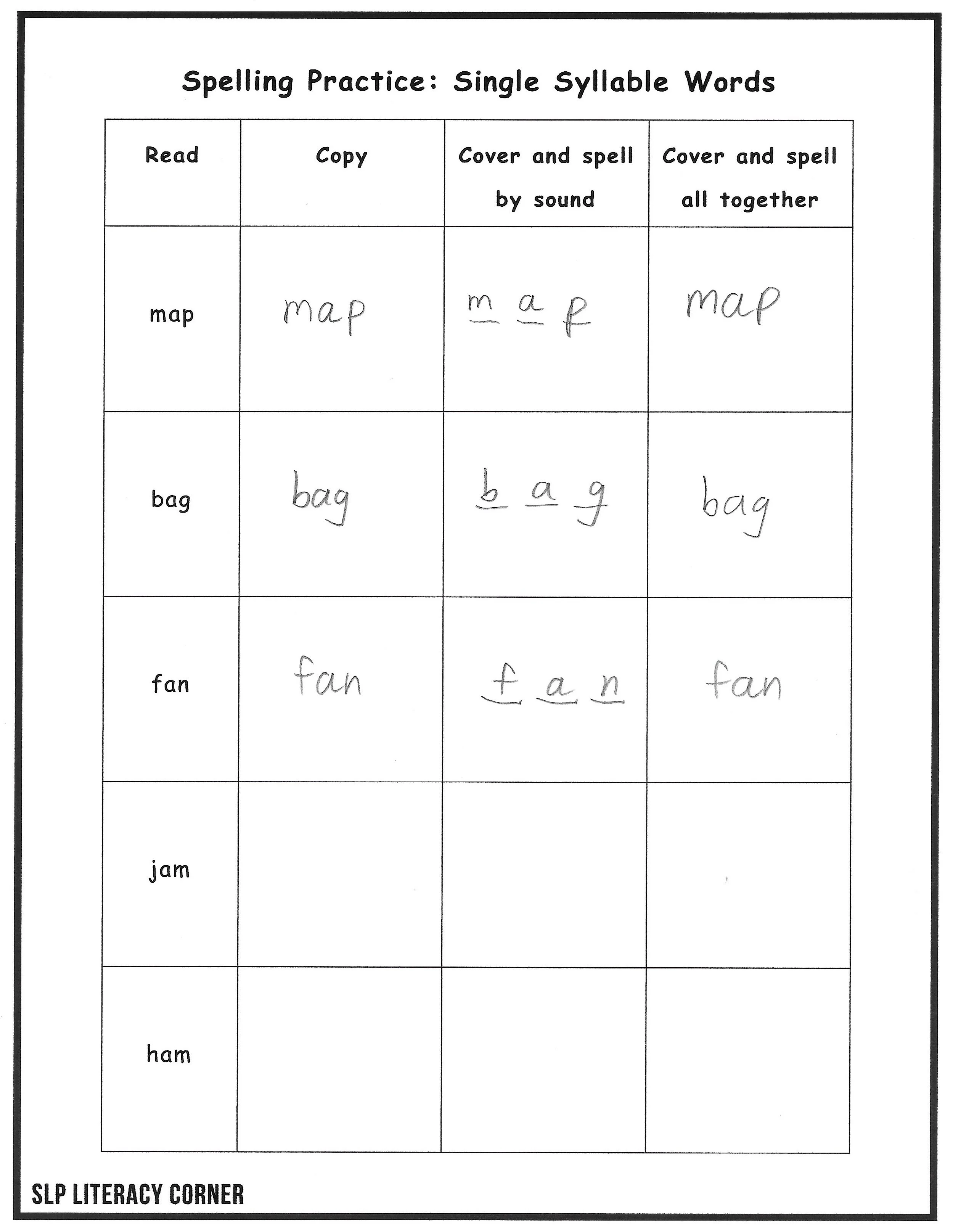
For each word, students follow this sequence:
Read the word.
Copy the spelling, saying each sound as they write the spelling.
Cover the word and spell it by sound (and by syllable for multisyllable words).
Cover the word and spell it again as a whole word.
Activity Notes
Each time the student spells the word, they should say each sound aloud as they write the spelling to reinforce the sound-to-spelling connection.
For repeated practice, change the word order each time to prevent memorization of word order rather than true learning of spelling.
Detailed Instructions for Single Syllable Words
Educator types/writes all spelling words in the “read” column.
Student reads the first word.
Student copies the spelling of the first word. They should say each sound as they write the spelling (focusing on the sound-to-spelling connection).
Use another page that is not see-through like construction paper to cover the columns of words, then have the student spell the target word by sound (e.g., map); add a line visual for each sound if needed. They should say each sound as they write the spelling.
Slide the paper over to cover the previous columns, then have the student spell the word again, but all together this time (e.g., mat). They should still say each sound as they write the spelling
Detailed Instructions for Multisyllable Words
Educator types/writes all spelling words in the “read” column.
Student reads the first word.
Student copies the spelling of the first word. They should say each sound as they write the spelling (focusing on the sound-to-spelling connection).
Use another page that is not see-through like construction paper to cover the columns of words, then have the student spell the target word broken up into syllables (e.g., cli mate or cal en dar). They should say each sound as they write the spelling. They may also want to use a "spelling voice" (slightly exaggerating or clarifying vowel sounds as they segment the word) so that what they say more closely matches the spelling. This can be especially helpful when spelling words that contain a schwa vowel sound.
Slide the paper over to cover the previous columns, then have the student spell the word again, but all together this time (e.g., climate or calendar). They should still say each sound as they write the spelling.
Below are example spelling practice pages using actual school word lists I worked on with two of my students. You can also watch me give a video demonstration of this activity on Instagram @slp.literacy.corner
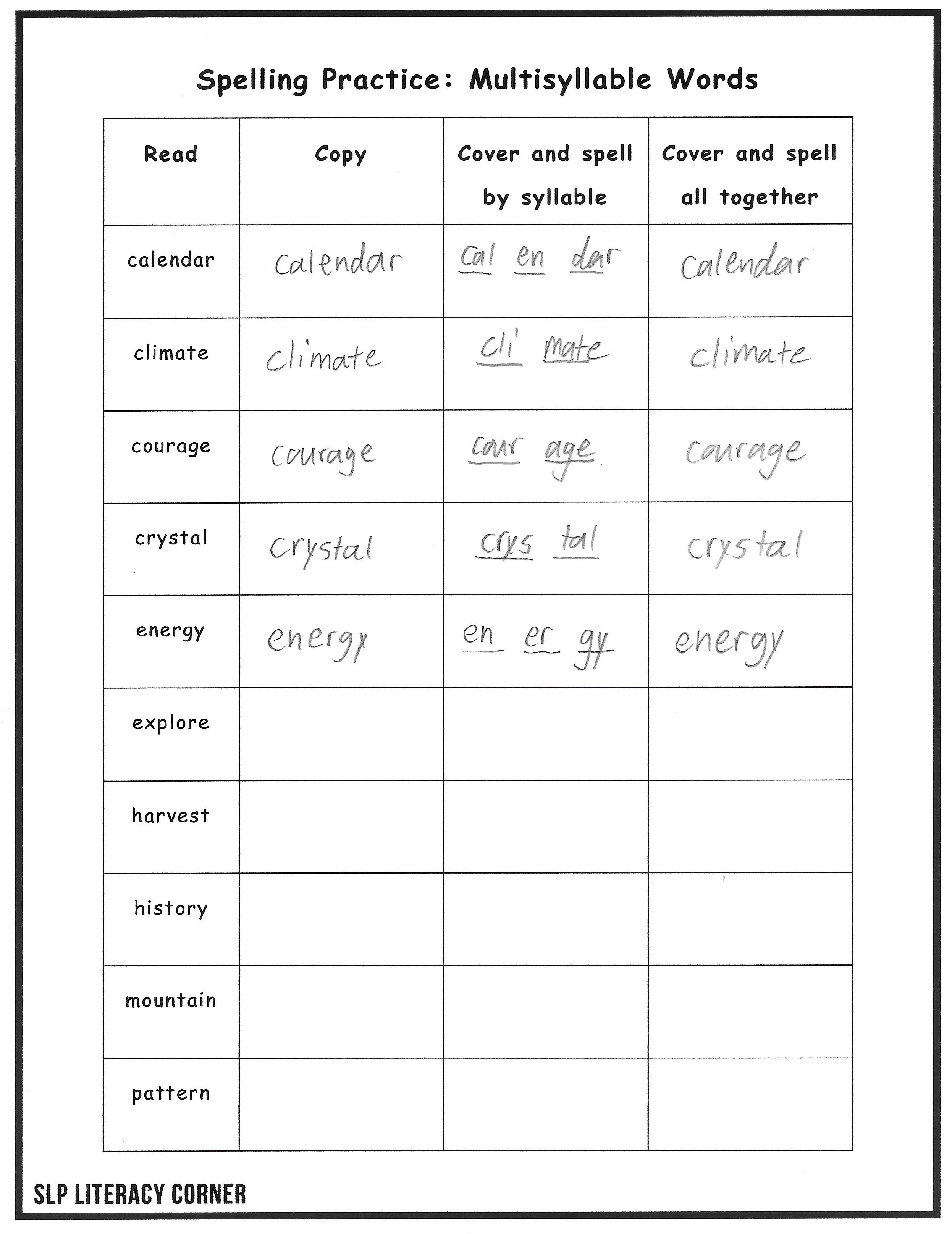
I hope this helps you and your students approach spelling test practice in a more effective and less stressful way!
Join the SLP Literacy Corner email newsletter to get access to exclusive free resources, including spelling practice templates. Sign up here!
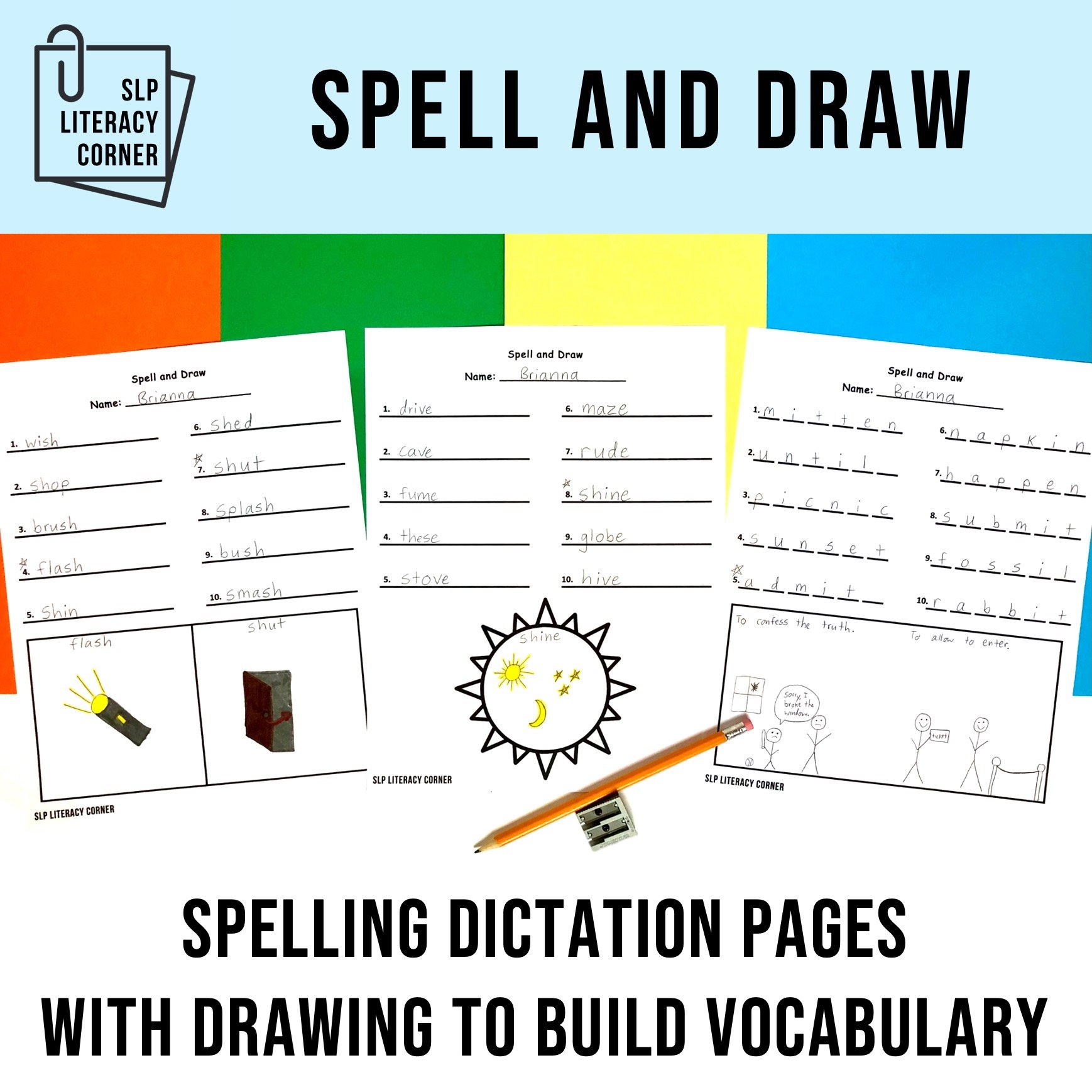
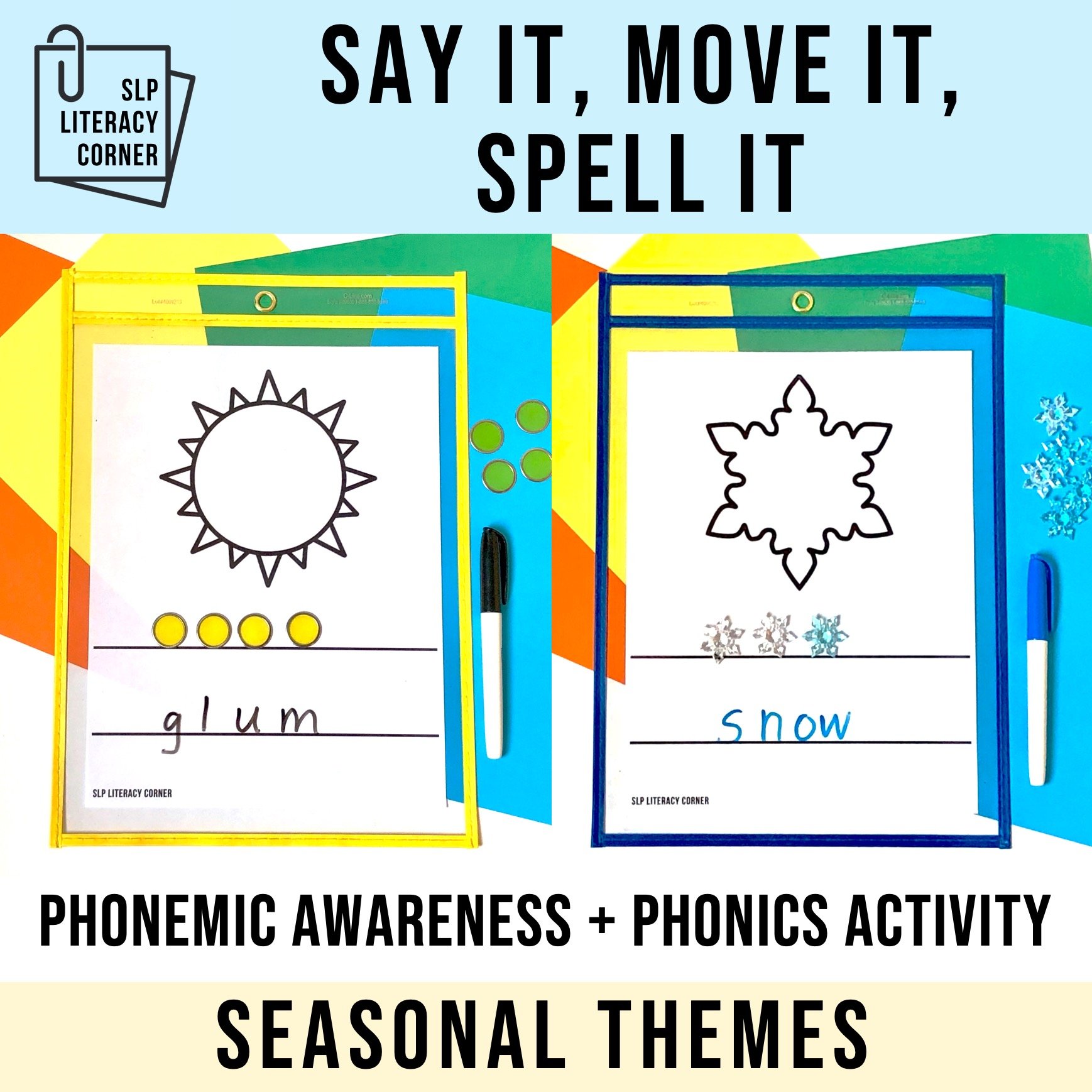
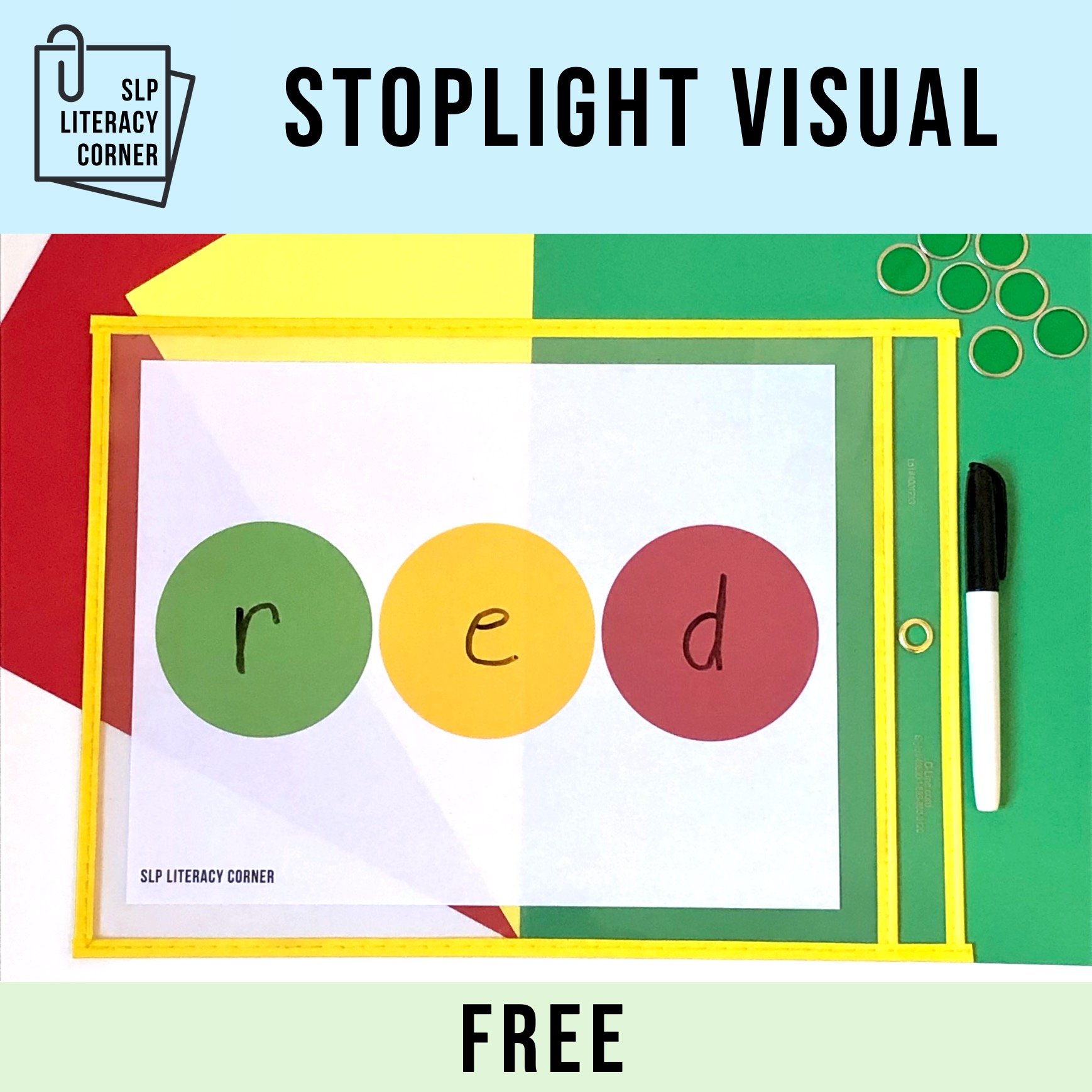
If you're looking for spelling activities, check these out:
References:
Based on single and multisyllable read then spell activities used in programs that follow a Speech-to-Print/Linguistic Phonics approach to literacy instruction, such as Reading Simplified and Sounds-Write.